

There Are Actually Two Religions Based on Jesus
And what it means for us today

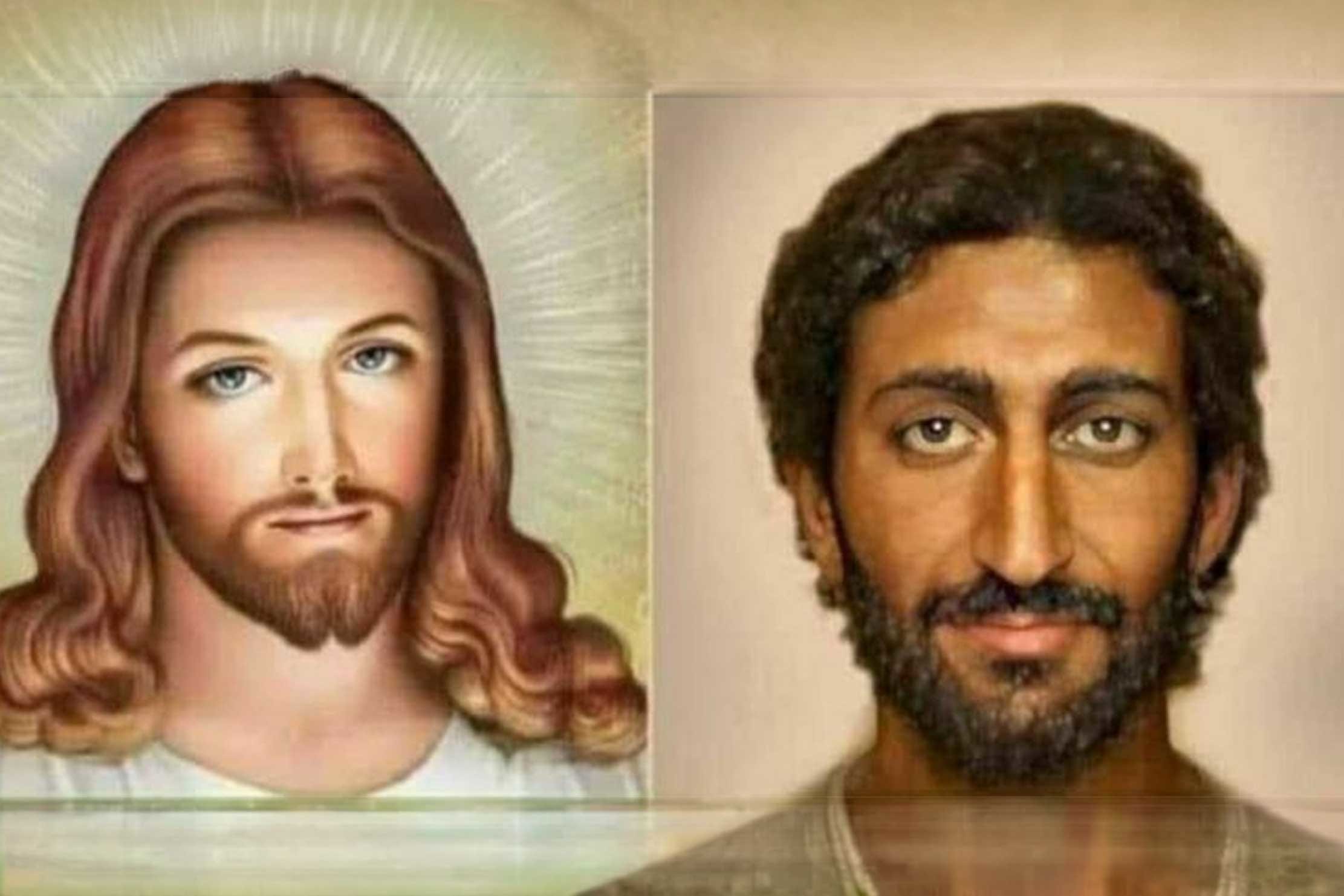
To almost anyone who can read, there’s a fundamental disconnect between most Christians and the man they supposedly base their religion on.
Jesus was a Jewish preacher, healer, and prophet, for whom non-violence, rejection of wealth, and standing up to oppression, injustice, and empire were nonnegotiables.
But when you hear the son of the 20th century’s most prominent evangelist vehemently defend a president who casts himself as Jesus, or you see pictures of the 21st century’s most popular preacher’s sprawling mansion, you might begin to think: are we following the same guy?
The answer, quite clearly, is no. But it wasn’t until I was in seminary school that I realized why. We aren’t just following two separate guys—we’re practicing two completely separate religions.
The Religion About Jesus
The first religion is probably the one you’re most familiar with. It’s the one that bears a title some of his followers gave him after his murder: Christianity.1
An adherent of this religion is judged not on how well they follow the teachings of Jesus, but on how thoroughly they mentally assent to a list of ideas about him. Thus, it’s the religion about Jesus.2
To join this religion, one generally needs only to accept and believe two simple facts: 1) Jesus was God, and 2) his resurrection reconciled humanity to God. The details vary from the horrific to the benign, but in general, that’s the basis of what the religion about Jesus requires of you.
The various churches and denominations then add stuff on top of it. Some believe acquiescence to these ideas is enough for salvation (Protestants), while others believe that belief must be accompanied with sacraments (Catholics). Some require political conformity, especially in their transphobia or quest to control women’s bodies, while others require almsgiving or missionary trips.
But to all of them, belief is the most important. It’s what you believe—not what you do—that keeps your membership in the club active. Having the wrong belief will get you kicked out of the club—but behaving poorly—won’t.
It’s why this religion’s most prominent leaders can stand over a pedophile-protecting president who himself sexually assaulted at least one woman and pray for his victory. But dare question the divinity of Jesus—and you’re marked as a heretic for life.3
The Religion of Jesus
Needless to say, this is not the religion that Jesus himself practiced.
And here, we are talking about the actual man Jesus—the person who lived and walked the shore of Galilee some two thousand years ago, what scholars call the historical Jesus.
This is a person discovered through the Bible but it is not the Jesus of the Bible. That’s because each of the writings of the Bible has a particular point of view on who Jesus was and what his message and meaning for your life is. They are not historical or journalistic documents—they are propaganda. Discovering the human behind them requires the hard academic work of sussing out what is likely true and what is likely not true.
As such, we can say with relative certainty some general facts about Jesus, and then make some educated guesses about what his religion actually was. (The debate centers around mostly minor details for those wanting to follow his teachings today.)
There are certain things we know for sure about the historical Jesus. At no point did he renounce his Judaism, but he was clearly anti-establishment. He rebelled against religious leaders he saw as hypocritical, who conspired with their Roman colonial overlords, and whose spirituality required costly purification rituals.
To him, God was much closer. At the center of his religion was a radical love of God. In the synoptic gospels, Jesus repeatedly affirms that the Greatest Commandment of God’s law is the commandment to love God with all your heart, with all your soul, and with all your mind.
This was not an unexpected answer—this commandment is repeated millions of times each day by devout Jews who still say the shema prayer today. What is uncommon is what followed it: Jesus continually paired it with love of one’s neighbor. In Matthew, Jesus says that the rest of the law is based on these two commandments; in Luke, he says that following them is the way to eternal life.
To him, God was not just found in the Temple in the Holy of Holies, accessible only to the high priests and those who paid the fees to sacrifice the correct animal at the correct time in the correct way to absolve oneself of one’s sins. To him, God was found anywhere and everywhere.
But Jesus went further. Traditionally, your neighbor only included other Jews. Jesus flipped that on its head. To him, your neighbor was anyone and everyone. Jesus explains this explicitly when asked after saying the second greatest commandment in Luke, “but who is my neighbor?”
His response was the Parable of the Good Samaritan. The person who helps is not who you would expect, but the Jewish person’s traditional enemy: a Samaritan. Jesus’s message is consistent: we must love our enemies, we must turn the other cheek. Our neighbor is everyone.
This radical love—that produces a radical way of living—was at the center of his religion. It was the main requirement for entering the coming Kingdom of God that was at the center of his prophetic message.4
This religion of Jesus is markedly different from the religion about Jesus.
The Split
So how did we get two religions from Jesus—one about and one he actually practiced? In a word, Paul.
Paul, who admits himself that he never met Jesus (but claimed to meet a risen Christ), totally disregards Jesus’s ethical teachings. To Paul, the most important thing for any Jesus follower was to believe that Jesus was bodily resurrected and that Jesus was Lord.5
To him, that was the main requirement for entry into the coming Kingdom of God. Not loving one’s neighbor, not loving God, but making a few pronouncements and acquiescing to Paul’s personal theology.
To be fair, Paul’s ideas were just one set of ideas in a sea of beliefs that proliferated after Jesus’s death. We know this because Paul spends a great deal of time in his letters debating other teachers, in turns admonishing and admiring those who would accept or reject their opposing views.
By no means would Paul’s religion about Jesus become “orthodoxy” had it not been in the ruling class’s interests to adopt his beliefs and violently enforce them on the working class. (For more on this process, see my essay on Paul.)
The adoption and forced spread of Paul’s religion was essential to the ruling class remaining in power, not the least because it defanged Jesus’s anti-establishment message.6 The political and economic consequence of the religion of Jesus meant a radical change in material circumstances, particularly for those at the top hoarding all the wealth.
But Paul’s theology, which contained the seed of quiet acceptance of earthly misery for heavenly reward—if you believe what we tell you—is quite a helpful tool in placating the masses. So the empire adopted the religion about Jesus instead, and did everything in its power to destroy any vestige of an opposing, original view.
The Choice We Have Today
But what the empire didn’t count on was the power of Jesus’s original message. The thing that made it so powerful and appealing to begin with—its insistence on love, equality, and justice—kept resurfacing anyway, generation after generation: in monastics who took poverty seriously, in reformers who read the Gospels as an argument for the poor rather than a script for heaven, in a civil rights movement built explicitly on the Sermon on the Mount instead of the Nicene Creed.
Two thousand years later we’re left holding two religions that share a name and a founder. One asks you to believe in Jesus. The other asks you to follow him. One got the empire’s blessing and the legions to enforce it—the other got a man nailed to a cross for threatening the arrangement in the first place.
You can keep the first one. Plenty of people do, and plenty of them are perfectly nice. But if what drew you to Jesus in the first place was the radical love, the enemy-forgiving, the debt-canceling, the standing-with-the-oppressed part—if that’s the Jesus you actually wanted—you were never required to sign up for the other religion to get him.
The religion about Jesus and the religion of Jesus are not the same thing. And I know which one I choose.
If you liked this post…
Consider becoming a paid supporter of The Jesus Movement, to help keep our work free, online, forever.
"Christ" translates the Greek Christos, itself a rendering of the Hebrew mashiach ("anointed one")—a title, not a surname. In first-century Judaism, "anointed one" usually meant a future human king or deliverer, not a divine being. The earliest surviving Christian writings—Paul's letters, from the 50s CE, roughly two decades after Jesus's death—already use "Christ" so constantly it functions almost as his second name, suggesting the title got attached to him very early, within his own followers' lifetimes.
This idea has its roots in the work of the acclaimed African American theologian Howard Thurman. Thurman (1899-1981) was one of the most influential religious thinkers of the 20th century. A mystic, philosopher, and activist, he served as dean of Rankin Chapel at Howard University and later became the first Black dean at a predominantly white university when he led Marsh Chapel at Boston University. His 1949 book, Jesus and the Disinherited (Nashville: Abingdon Press), where his idea of the religion ‘of Jesus’ vs. the religion ‘about Jesus’ was first published, deeply influenced Martin Luther King Jr. and the civil rights movement.
Which I suppose is progress, considering once upon a time they would have just burned you at the stake.
Scholars point to passages like the parable of the sheep and the goats (Matthew 25:31–46), where entry into the Kingdom hinges entirely on how people treated "the least of these"—feeding, clothing, visiting the imprisoned—with no mention of belief in Jesus at all. By the criterion of dissimilarity, sayings that cut against the early church's own interests (salvation through faith in Christ's death and resurrection) are more likely authentic, since nobody invents a line that undercuts their own theology. See Bart Ehrman, How Jesus Became God (HarperOne, 2014).
Paul's most frequent title for Jesus, "Lord" (Kyrios), carried a specific charge: the confession in Philippians 2 that Jesus was exalted and given "the name above every name" was implicitly anti-imperial—if Jesus is Lord, Caesar isn't. But what Paul meant by it is debated. Some passages (Romans 1:3–4) suggest Jesus became Lord at the resurrection; others (Philippians 2) suggest Paul saw him as a preexistent, angelic being who was Lord even before his human life. Scholars disagree on whether this reflects one consistent view, a view that shifted over Paul's career, or older creeds Paul is quoting rather than composing himself.
The term for this is cultural hegemony, coined by the Italian Marxist Antonio Gramsci while he was imprisoned by Mussolini's fascist government. Gramsci's insight was that ruling classes rarely stay in power through force alone—they stay in power by shaping culture itself, making the existing order feel natural, common-sense, even sacred, so people consent to their own subjugation without a soldier in sight. Gramsci considered religion one of the most effective hegemonic tools available, since it can make suffering feel meaningful instead of unjust. See Joseph V. Femia, Gramsci's Political Thought (Oxford: Clarendon Press, 1987).
This is brilliant! Paul made Christianity a mental exercise, a Theology. Jesus presented a Way of living and loving. I have been stuck very much in Paul’s mental constructs, thinking I have arrived, while actually doing very little Jesus living for Father and others. Jesus rejected being anyone’s king, choosing instead to be everyone’s servant, helper, and friend. Choosing to ride to his certain death in Jerusalem on the back of the foul of a donkey, humble and lowly speaks volumes. Up is down, down is up.
I was skewered by some ladies when I mentioned that Paul is not my guide to the Bible or Christianity. Thank you for telling this today.